Bold Ideas.
Serious Strategy.
Unfiltered Analysis of America and the World.
Book me for newsrooms, conferences, and podcasts to make sense of geopolitics, intelligence, and national security — on the record, in plain language, on deadline.

Four Ways To Work With Me
Keynotes & talks
Conferences, universities, and private briefings on geopolitical risk, intelligence, and how to read a fast-moving story.
Panels & moderation
Substantive, plain-spoken contributions to panel discussions and debates — as a speaker or a moderator who keeps it sharp.
News commentary
Fast, on-record analysis for broadcast, print, and digital newsrooms. Reachable, quotable, and never off-topic.
Podcast guest
Long-form conversation on politics, intelligence, and world events — the kind of guest who makes the host sound smart.
Who You're Booking
Robert is a political scientist and open-source intelligence consultant analyst who translates complex geopolitical events into language a general audience can actually use. He lectures on political science, builds intelligence tools, and works as a licensed EMT — a rare combination of the analytical and the operational.
That range is the point: the same person who can brief a room on national security can speak with authority about crisis, preparedness, and what actually happens when a plan meets reality.
Research & Publications
Securing Arctic Dominance: A Comprehensive U.S. Strategy to Counter Russian and Chinese Influence in the High North
The Arctic has become a critical arena of geopolitical competition as climate change, emerging trade routes, natural resources, and national security interests converge. This capstone examines how the United States should respond to Russia’s expanding military presence and China’s growing economic influence in the region. It evaluates three policy options: a major U.S. military expansion, maintaining the current approach, and a balanced strategy combining military preparedness, economic investment, and diplomacy. The paper recommends the balanced approach, emphasizing stronger Arctic infrastructure, an expanded icebreaker fleet, closer NATO cooperation, increased surveillance, investment in strategic resources such as Greenland’s critical minerals, and stronger U.S. leadership in Arctic governance.
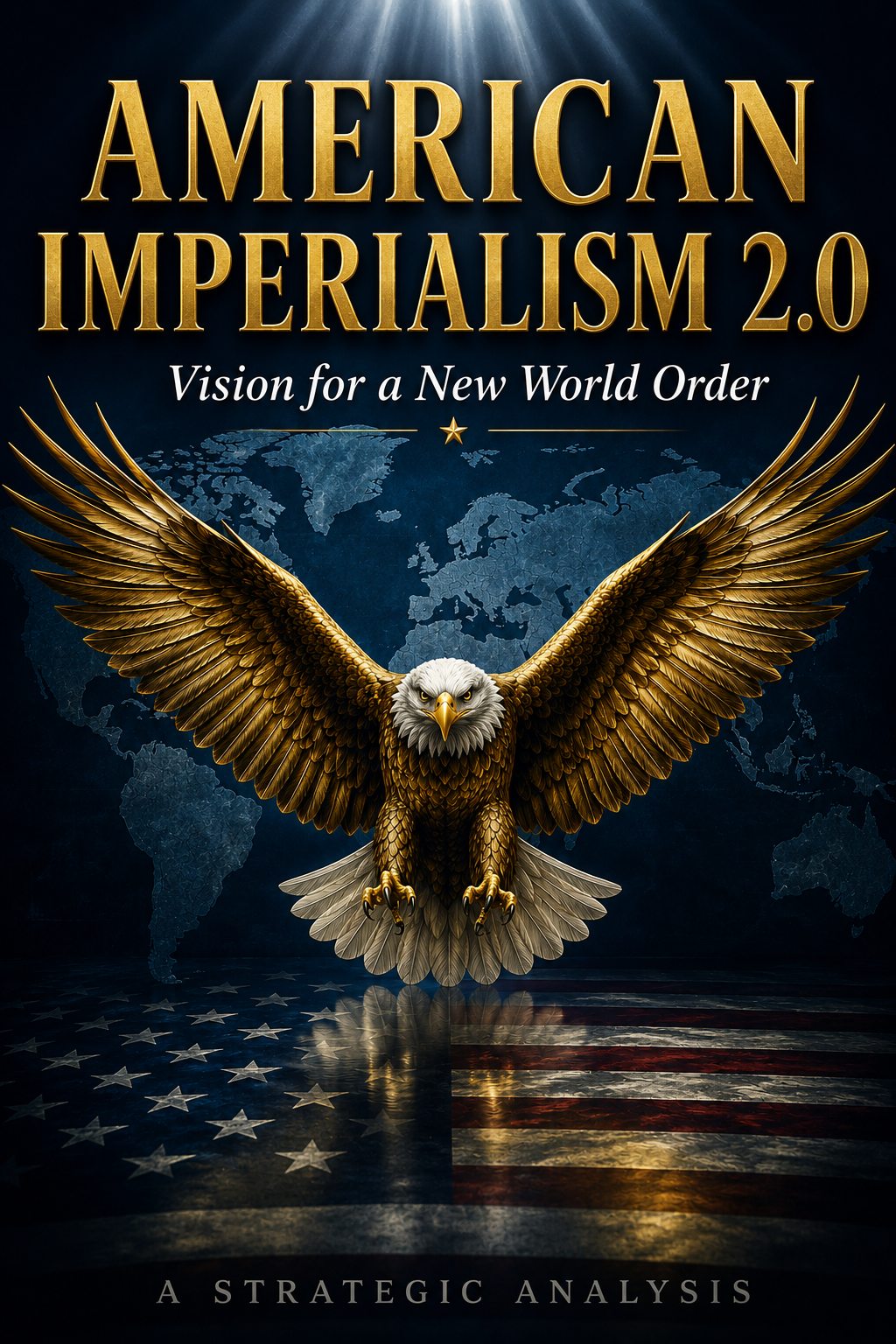
American Imperialism 2.0
American Imperialism 2.0 argues that the United States is not declining because power no longer matters, but because it has too often forgotten how to use power deliberately—across military strength, trade, industry, energy, alliances, technology, and strategic geography. Written for readers of politics, history, foreign policy, national security, and anyone trying to understand America’s role in a more dangerous world, the book shows that modern empire is no longer primarily about conquering territory; it is about controlling the systems, networks, resources, and relationships that shape what other nations can and cannot do. The reader walks away understanding that American power is not simply a measure of how much force the country possesses, but of how effectively it can structure the world so that cooperation is rewarded, aggression is deterred, and the United States retains the freedom to choose its own future.